

REPRODUCTIVE SURGERY –LAPAROSCOPY AND HYSTEROSCOPY
Laparoscopy and hysteroscopy are minimally invasive procedures used for selected pelvic or intrauterine findings. Compared with open surgery, recovery may be shorter in appropriate cases, but expected benefit, discomfort, complications and recovery vary by procedure and patient. Surgery is not a routine fertility treatment and does not guarantee improved fertility or pregnancy; its role depends on the diagnosis and whether correcting a specific finding is expected to change care.

- LAPAROSCOPY: Laparoscopy is performed through small abdominal incisions using a camera to examine selected pelvic and abdominal structures. It may be used to evaluate or treat conditions such as endometriosis when clinically indicated. Anesthesia, discomfort, recovery and procedural risks must be discussed individually.
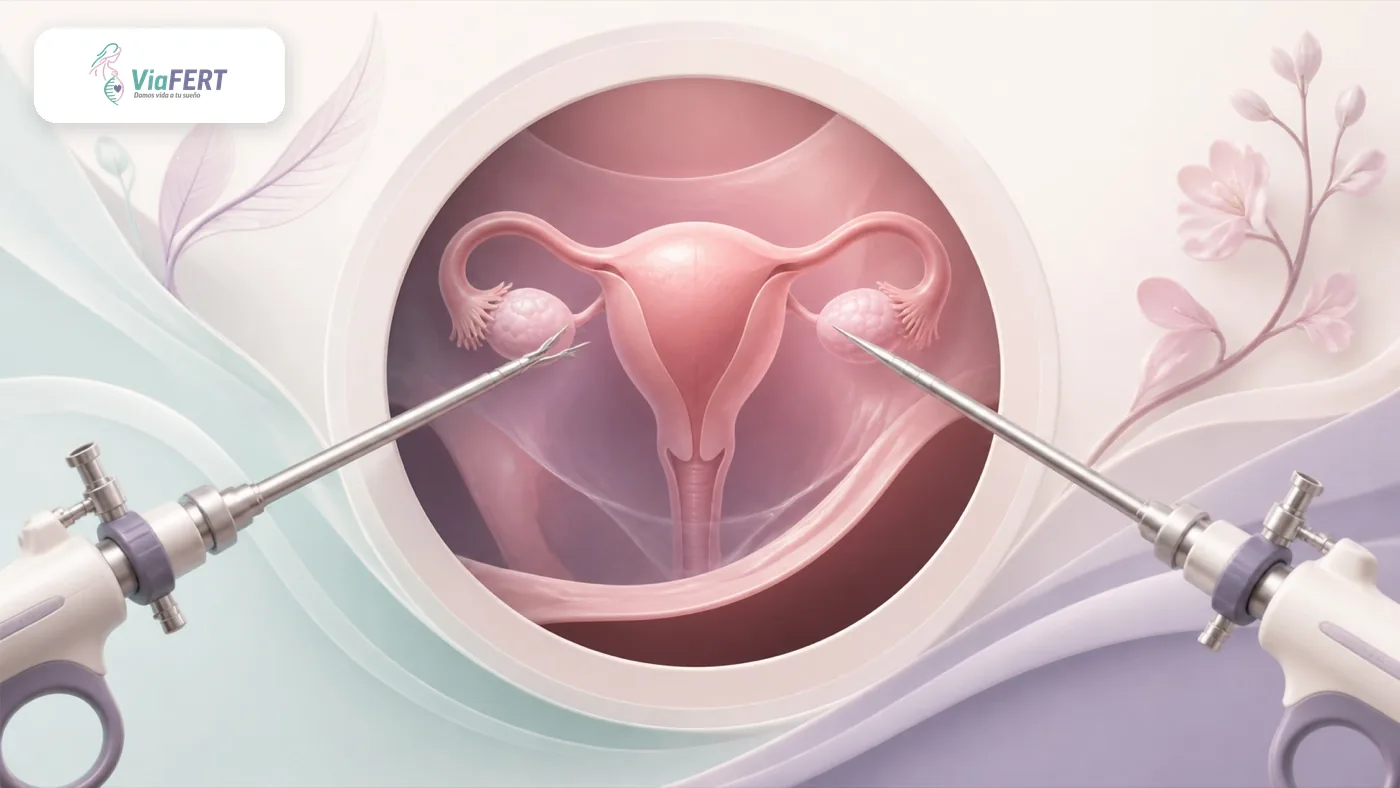
- HYSTEROSCOPY: Hysteroscopy is performed through the cervix with a narrow-diameter hysteroscope selected for the procedure. It can evaluate and, in selected cases, treat findings such as polyps, submucosal fibroids, adhesions or a uterine septum. Diagnostic and operative hysteroscopy differ in setting, anesthesia, recovery and risk, which require individual counseling.